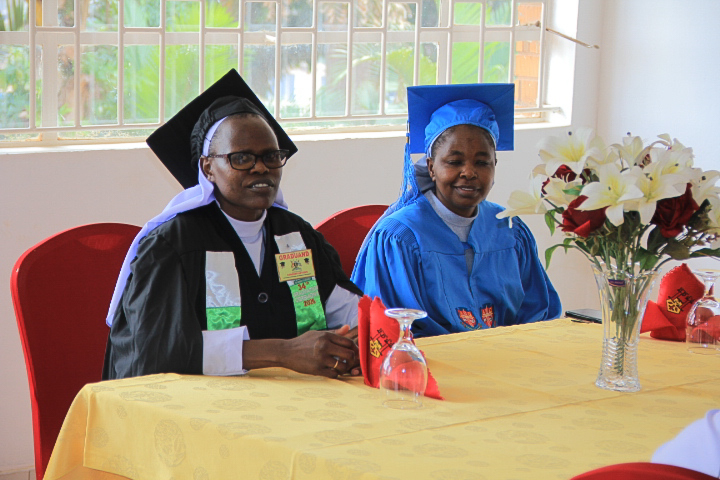
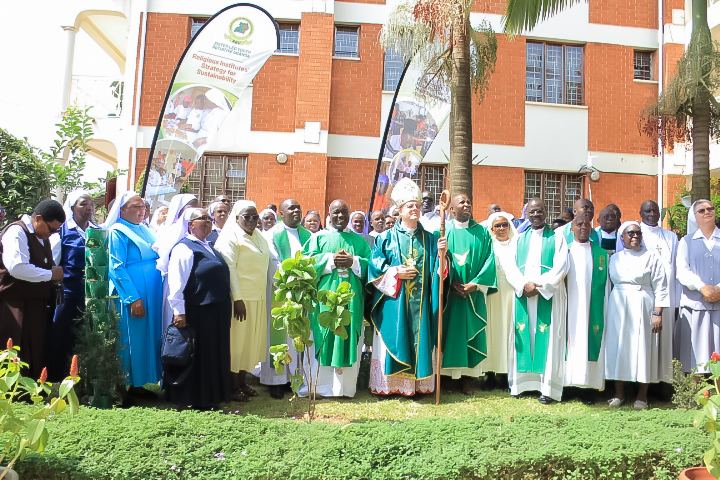
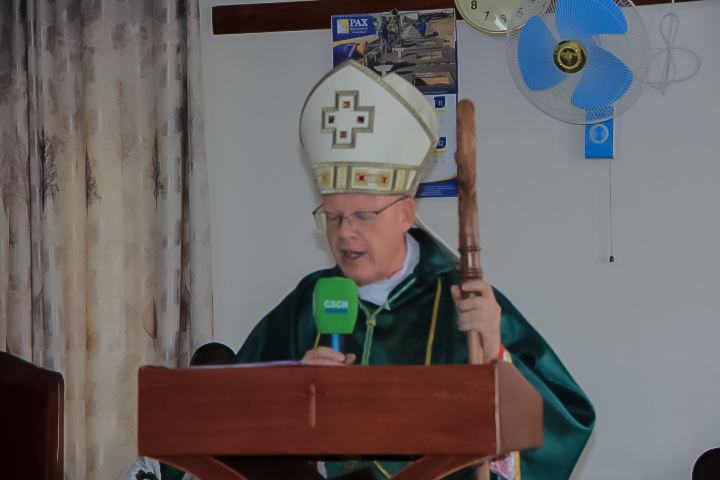
Apostolic Nuncio to Uganda, Archbishop Tomasz Grysa, presides over closing Mass, calling religious leaders to renew their commitment to service, accountability and the spiritual well-being of consecrated men and women.
By Sr. Stella Watsema OLGC
Religious superiors of consecrated men and women in Uganda have been challenged to embrace professional excellence, strengthen accountability and place people at the center of their mission as they respond to the changing needs of the Church and society.
The call was highlighted during the closing Mass of a four-day annual meeting of religious superiors at ARU conference Nsabya, presided over today by the Apostolic Nuncio to Uganda, Archbishop Tomasz Grysa, who was appointed to the diplomatic mission by Pope Leo XIV.
The annual gathering brings together leaders of religious congregations to reflect on their responsibilities, assess the challenges facing consecrated life and explore ways of strengthening their service to the Church and communities across the country.
Addressing the superior generals, the Apostolic Nuncio observed that religious life in Uganda is navigating a period of rapid transition, characterized by changing economic realities, shifting international donor priorities, growing secularization and the demands of a young and rapidly growing population.
He challenged religious institutions to abandon outdated approaches and embrace professional excellence as an expression of their spirituality and commitment to the Church.
” We cannot meet these modern challenges with outdated approaches,” the ApostolicNuncioemphasized calling for transparent financial management, proper legal protection of institutional assets, sustainable agricultural practices and the effective use of modern digital resources.
However, he cautioned that professional and administrative excellence must always serve the spiritual mission of religious institutions rather than become an end in itself.
Putting people before projects
One of the strongest messages from theApostolic Nuncios address was the need for religious superiors to priorities people over institutional projects, buildings and material achievements.
“Our greatest challenge is not our men or our buildings. It is our brothers and sisters,” the speaker stressed.
He called on religious superiors to invest more deeply in the spiritual, intellectual and psychological formation of members of their congregations, noting that the strength of religious life ultimately depends on the quality of the people who live and serve within it.
The Apostolic Nuncioencouraged superiors to exercise courage and discernment, including scaling down or handing over projects and institutions that no longer effectively serve the mission of the Church. This, he explained, would allow congregations to redirect resources towards strengthening community life and the well-being of their members.
Religious life making a difference in society
The call for renewed leadership also highlights the important contribution of consecrated men and women to the lives of people across Uganda.Through various ministries, religious congregations have an important role in accompanying communities, especially those facing poverty, vulnerability and limited access to essential services.
Religious sisters’ presence in education, healthcare, pastoral care, social development and other charitable works provides opportunities for children to access education, families to receive healthcare, communities to experience solidarity and individuals to encounter the compassion of the Church.
Beyond managing institutions and projects, religious men and women are called to be witnesses of hope, compassion and Christian service. Their mission is not simply to provide services but also to restore human dignity, nurture faith and stand alongside people in their daily struggles.
The Apostolic Nunciochallenged religious superiors to ensure that their congregations remain responsive to the real needs of the people they serve, while maintaining the spiritual identity and values that define consecrated life.
Drawing inspiration from the Uganda Martyrs
TheNuncio also reminded the religious leaders of the rich spiritual heritage of the Church in Uganda, particularly the witness of the Uganda Martyrs, including Saint Charles Lwanga, Saint Matthias Mulumba and their companions.Their courage, unwavering faith and refusal to compromise their Christian convictions were presented as an enduring example for consecrated men and women today.
He urged religious superiors to draw inspiration from the Martyrs’ commitment to their faith, especially in a society experiencing changing values and growing secular influences.Quoting the day’s responsorial psalm, he encouraged the leaders to remain spiritually focused despite the demands and pressures of leadership.
“Let us go up to the house of the Lord,” he recalled, inviting religious superiors to renew their commitment to God and the mission entrusted to them.
Leadership measured by the well-being of religious
The Apostolic Nuncioemphasized that the success of a religious superior should not be judged solely by the number of institutions managed, buildings constructed or financial records maintained.While sound financial management is essential for accountability and justice, the more important measure is how well religious leaders care for, form and protect the men and women entrusted to their leadership.
TheNuncio challenged members of the Association of Religious in Uganda to reject timid and fearful approaches to religious life and instead embrace courageous, responsible and professionally grounded leadership.
As the four-day annual meeting came to a close, the message to religious superiors was a renewed call to make their leadership meaningful through service, sound stewardship and genuine concern for people.
Ultimately, the vitality of consecrated life in Uganda will not be measured merely by the institutions religious congregations establish or the projects they manage, but by the lives they transform, the communities they accompany and the hope they bring to the people they serve.
A renewed religious life must therefore be one in which professional excellence strengthens spirituality, leadership promotes human dignity and every institutional resource serves the mission of Christ.